Using BeiDou positioning, laser scanning, 3D point-cloud processing and an industrial digital twin, the system enables remote, semi-automatic and fully automatic unmanned operation of grab ship unloaders. Core capabilities — hatch identification, live material-profile updating and grab pose sensing — substantially raise the efficiency and safety of bulk cargo handling.
Product DetailsIntelligent port handling combining BeiDou positioning, laser scanning and AI
Independently developed by Dalian Glory Marine Technology Co., Ltd., the system uses a modular design integrating BeiDou positioning, laser scanning, video cameras, data acquisition boxes and a 3D visualisation client to enable remote, semi-automatic and fully automatic unmanned operation of grab ship unloaders.
Core capabilities include hatch identification, live material-profile updating, grab pose sensing and coordinated operation with hold-cleaning machines. The system is widely used in bulk and general cargo ports, metallurgy and power generation, and has been deployed at Yingkou Minmetals, Huaneng Caofeidian, Fujian Minguang and Dalian Port, among others.
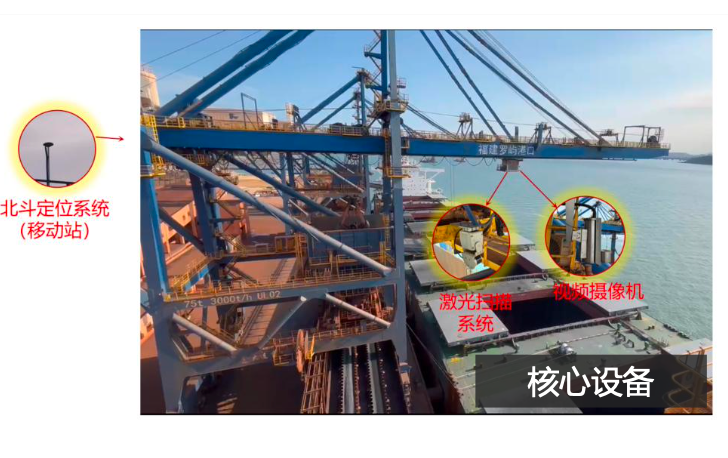
On-machine and ground equipment are linked directly by fibre for efficient, stable data communication
Core sensing and positioning equipment installed on the unloader itself
The ET2 box and switch are installed in the machine's electrical room, the BeiDou antennas on the roof outside it, and the scanner and camera on the railing outside the operator cabin
Data processing and visualisation equipment in the control room
Machine and ground are connected through two fibre-linked switches for high-speed, stable data transfer
Six intelligent modules raising the efficiency and safety of port handling
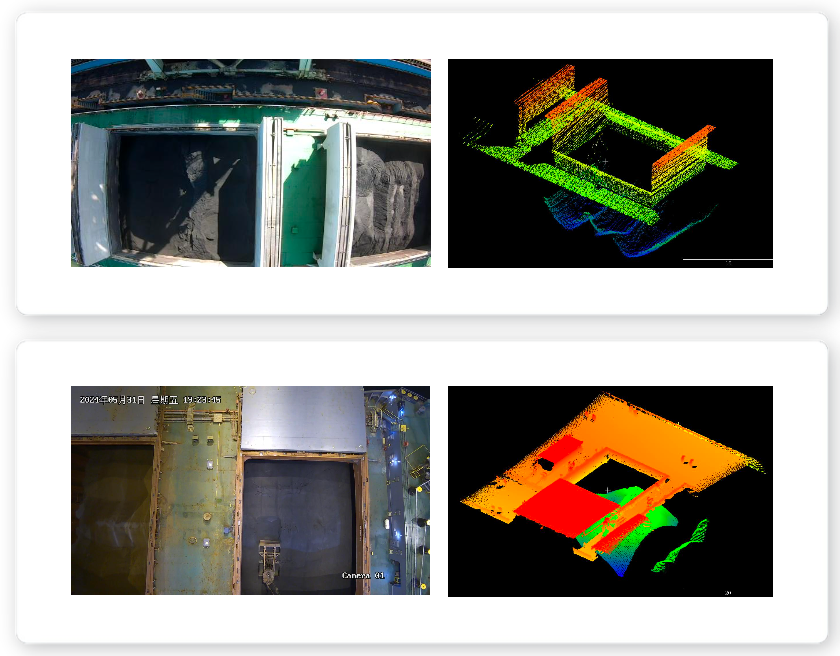
The system scans and identifies hatches of any length and width, covering the hatch forms found on bulk carriers. It determines hatch size, inclination and the coordinates of the four corners, rendering size and pose in 3D.
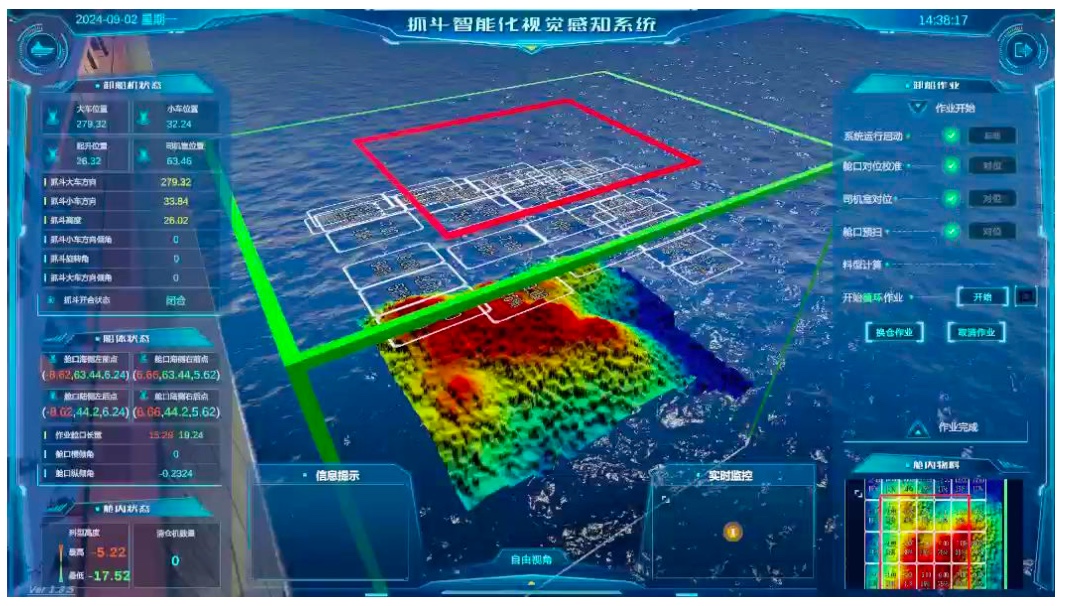
A grab-scan-update cycle refreshes the material profile after every grab. The material grid is calculated outward from the hatch edge, supporting digging on both seaward and landward sides and at both lateral edges.
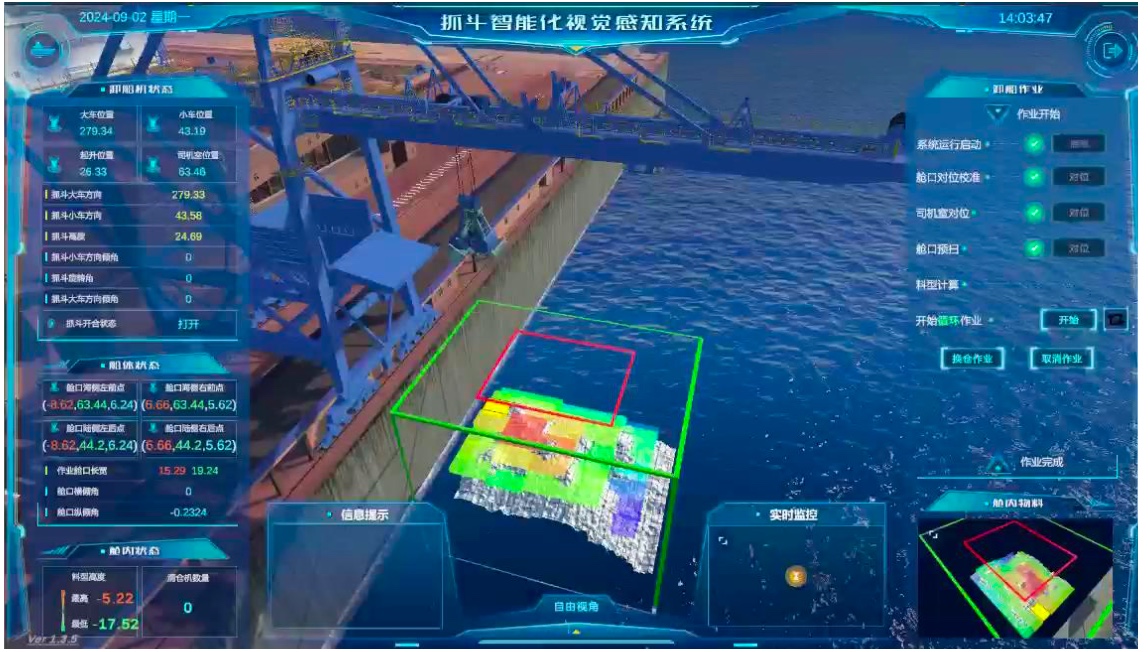
Offset and angular deviation between the grab and the PLC reference position are identified during operation. The PLC reference appears as a solid model in the 3D view and the actual grab offset as a ghost overlay, updated every 200–300 ms.
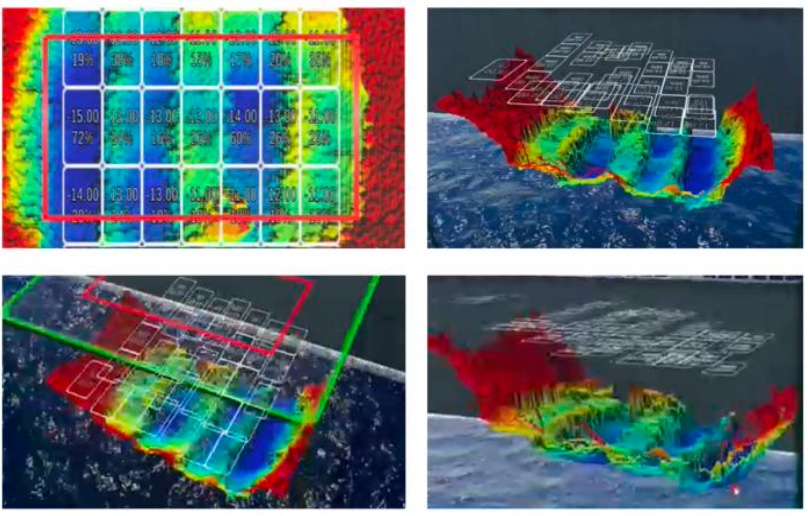
A 3D digital twin interface shows equipment status from any angle together with the material profile in the hold, giving full oversight of the unloading process with greater safety and efficiency.
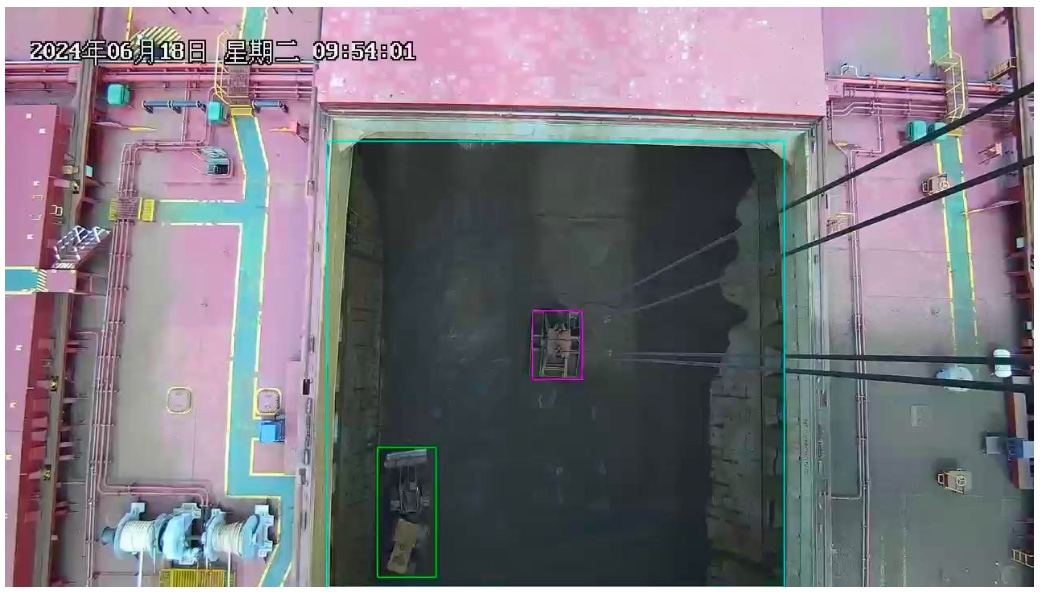
During hold cleaning the camera identifies the cleaning machine around the grab; spatial calibration between the video image and the laser point cloud converts image coordinates into spatial coordinates for coordinated operation by the PLC and the cleaning machine.
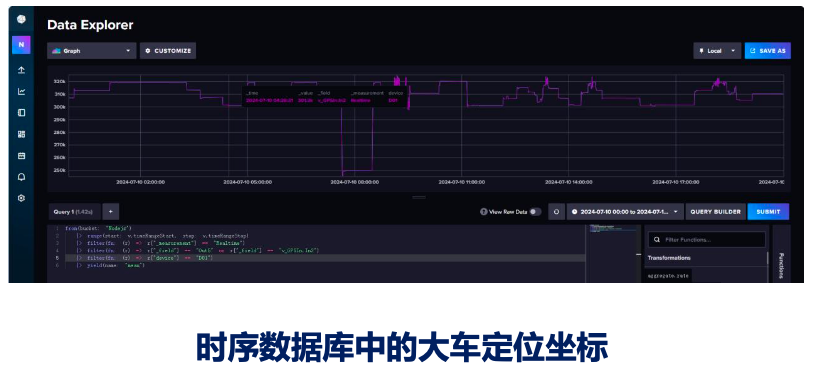
A time-series database stores equipment status and recognition data across the whole process, supporting review and replay of any period for maintenance and operational optimisation.
Watch the unloader in operation with 3D visualisation
Deployed in operation at several major enterprises
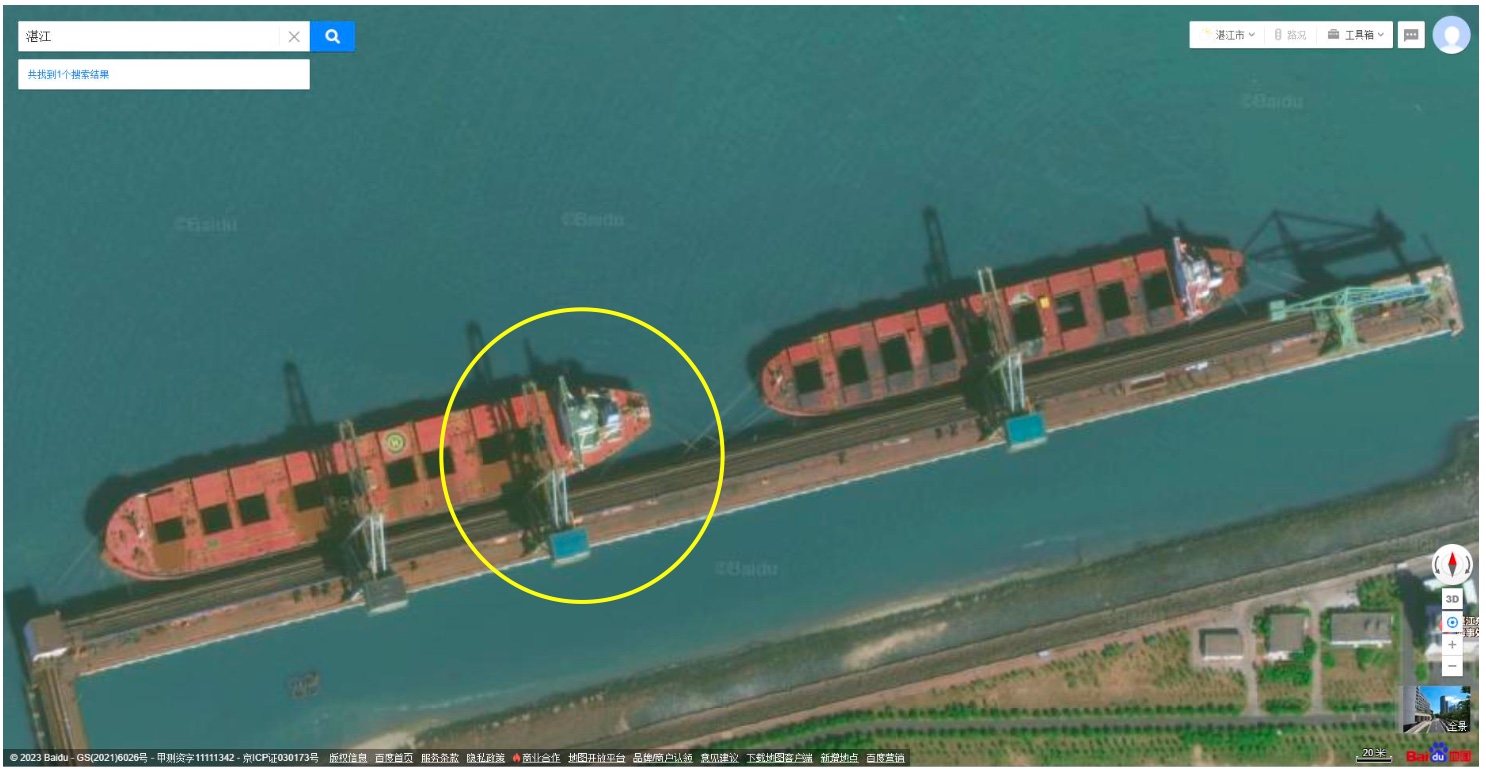
An intelligent grab unloader system was deployed at the Baosteel Zhanjiang raw material terminal for efficient, intelligent handling of ore and coal, supporting the digital upgrade of a major steelmaker's raw material supply chain.
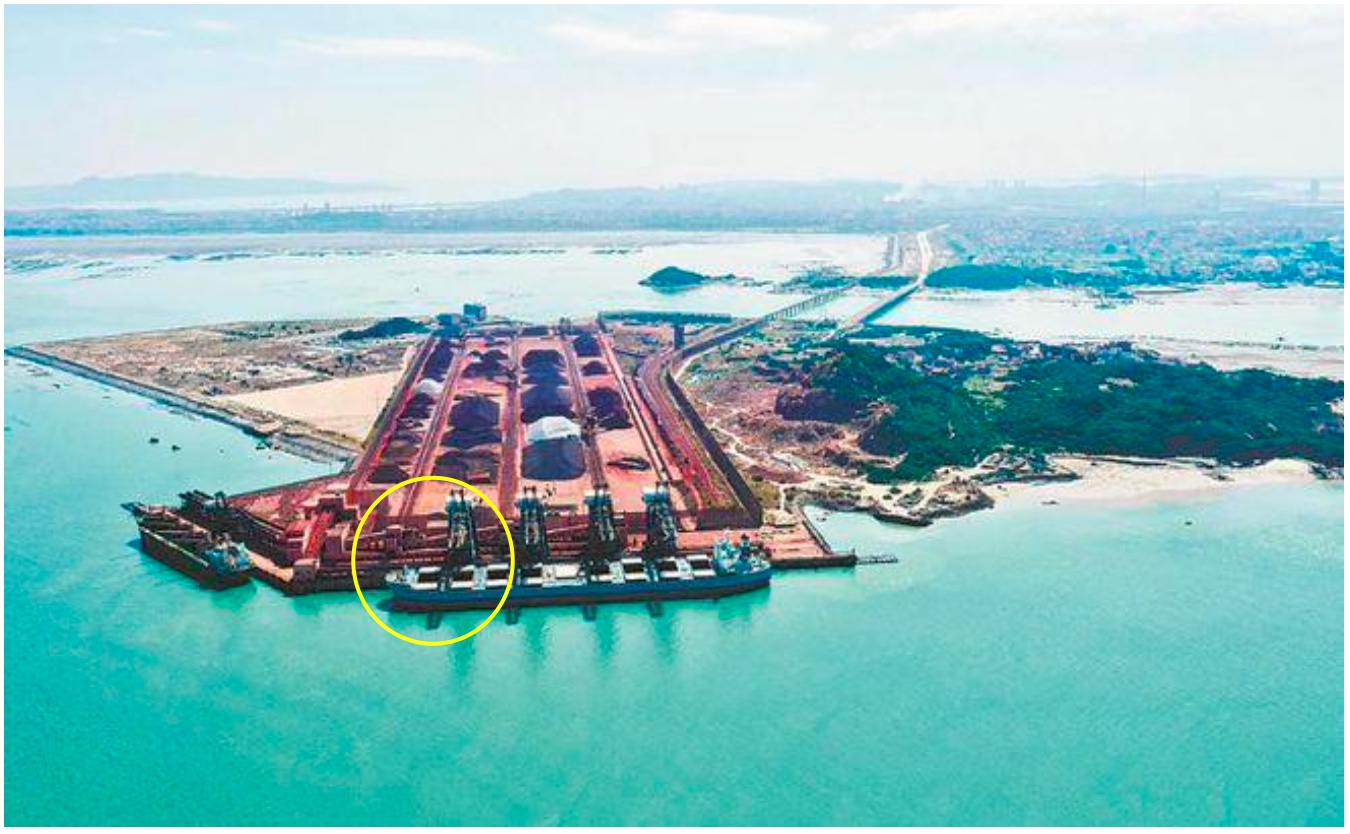
A clustered intelligent unloader solution was deployed at Luoyu Port, enabling coordinated multi-machine operation and central dispatch, substantially raising bulk throughput and the level of automation.
The complete sequence from hatch identification to coordinated hold cleaning
The laser scanner pre-scans the hatch, determining size, inclination and corner coordinates to establish a 3D spatial reference.
The material grid is calculated from the hatch edge and a 3D profile of the cargo is built as the basis for grab path planning.
The system plans the optimal grab path from the material profile; the operator selects remote, semi-automatic or fully automatic mode.
After each grab the system immediately rescans and updates the profile, fusing the machine's travel position with the hatch pre-scan result.
During cleaning the system identifies the position of the hold-cleaning machine, coordinating it with the grab to clear the full hold.
Performance and Technical Parameters
Competitive Advantages
Laser scanning, video recognition and 3D point-cloud processing combine to perceive hatch, material profile and grab pose, with a response cycle under 200 ms.
Remote, semi-automatic and fully automatic modes with one-screen control of multiple machines substantially reduce operator headcount and labour cost.
A grab-scan-update cycle keeps the material profile current, and intelligent path planning optimises the grabbing sequence, markedly improving bulk handling efficiency.
The 3D digital twin gives full oversight of the process, coordinated cleaning avoids collision risk, and the time-series database supports historical analysis.
Suited to a wide range of bulk cargo handling operations
Large-scale unloading of coal, ore and grain, improving efficiency and safety.
Raw material terminals of steel and non-ferrous smelters, for intelligent handling of ore, coke and similar bulk materials.
Coal terminals at thermal power stations, keeping fuel supply efficient and reliable.
Large bulk storage and logistics hubs, for intelligent transfer and storage.
