An economical safety system built for marine aquaculture that solves, at very low cost, the industry's recurring problem of cages lost after typhoons. Intelligent early warning, real-time monitoring and anti-loss design sharply reduce losses for growers and cut large claim exposures for insurers.
View SpecificationsSolving the industry's most costly typhoon problem at very low cost
Conventional typhoon protection for net cages is expensive and beyond the reach of small growers. Through engineering innovation and design optimisation the system cuts cost to one third of the conventional approach, putting effective protection within reach of small and mid-sized farms.
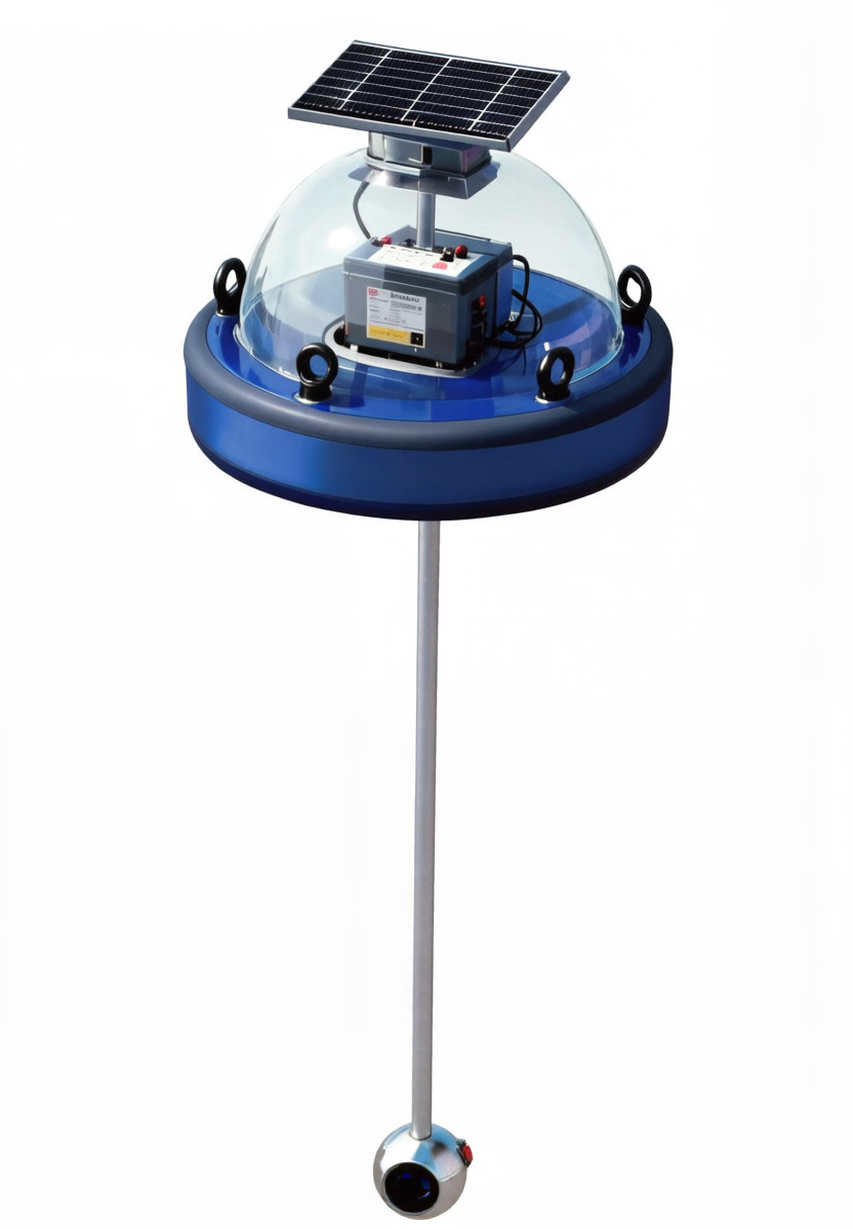
The system integrates weather warning, position tracking and automatic alarm. It gives ample notice before a typhoon arrives, monitors cage condition throughout, and locates any cage that has shifted afterwards, greatly reducing asset loss.
Compared with conventional practice, the system is clearly ahead on both cost and outcome
Cage loss of 30–50 % during the typhoon season
Average loss per typhoon: ¥200,000–500,000
Typhoon reinforcement: ¥50,000–100,000 per year
High cost, high riskCage loss reduced to 5–8 %
System investment: ¥15,000–30,000
Annual maintenance: ¥1,000–2,000
85 % of the loss avoidedTechnical Specifications and Performance
Four steps from monitoring to recovery
The system monitors cage position, tilt, wind speed and wave conditions around the clock, transmitting data to the monitoring centre over 4G or satellite.
Weather service data and AI models forecast typhoon impact 24–72 hours ahead, with automatic alarms when a cage moves or environmental parameters exceed limits.
GPS/BeiDou dual-mode positioning holds ±2.5 m even in typhoon conditions, tracking the movement of every cage.
After the typhoon the precise position data locates displaced cages quickly, shortening recovery time and reducing loss.
A dependable risk management tool for aquaculture insurance
The system can cut typhoon-related claims by more than 60 %, materially improving underwriting profit.
Continuous monitoring data gives insurers an objective basis for risk assessment and differentiated pricing.
Recorded position and environmental data serve as objective evidence in claims investigation and deter fraudulent claims.
Live monitoring data supports parametric and on-demand products that conventional underwriting cannot offer.
Applications across marine farm installations and insurance services
Precise positioning and condition monitoring for deep-sea anti-wave cages, preventing displacement and damage during typhoons.
Protects raft and floating installations in inshore culture areas, reducing structural loss and stock escape during typhoons.
Provides insurers with a risk management tool that lowers typhoon-related claim exposure and improves underwriting quality.
Supplies fisheries authorities with monitoring data on farm installations in support of post-disaster response and loss assessment.
