
Windrider Fully Domestic USV Series
The GLORY MARINE Windrider series provides a complete domestically sourced solution — monohull to catamaran, chipset to operating system — designed for hydrographic survey, environmental monitoring, hydrological investigation and waterway patrol. Advanced autonomous control and multiple communication systems cover a range of operating scenarios.
Explore the RangeProduct Overview
Professional-grade unmanned surface vessels for any waterway
Intelligent · Efficient · Reliable
Windrider vessels use advanced autonomous navigation control with both manned and unmanned operating modes and a complete fault diagnosis and emergency system. Both the large monohull and the compact catamaran serve distinct operating scenarios.
Multiple communication systems — 4G/5G public networks, satellite and private radio — maintain a stable link in all environments. An advanced navigation system delivers centimetre-level positioning for hydrographic and hydrological survey.
- Manned and unmanned operating modes, switchable
- Autonomous navigation with route planning and automatic obstacle avoidance
- Multiple communication systems for stable data transmission
- High-precision positioning for professional survey
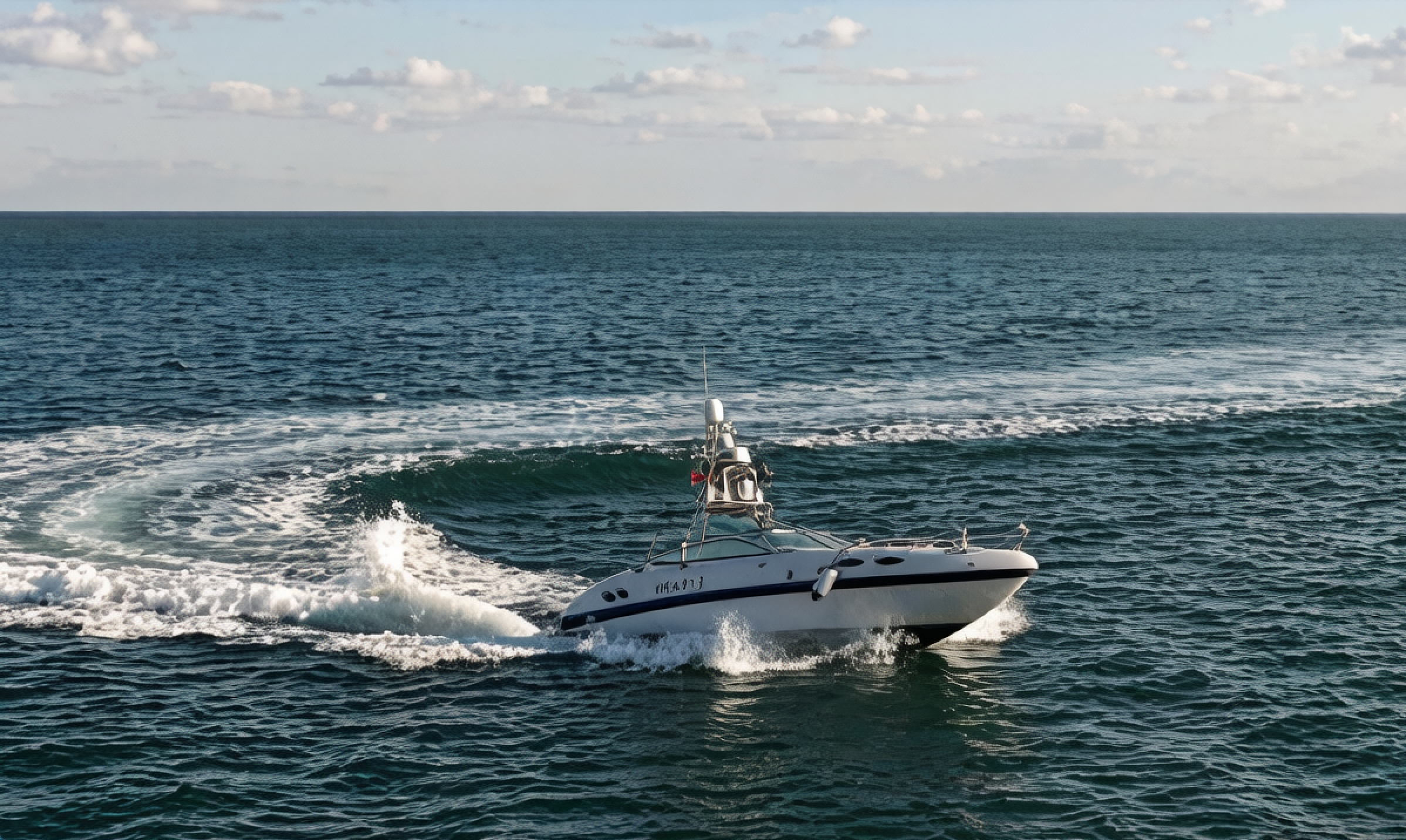
Core Products
Windrider USV Series — monohull and catamaran configurations
Windrider Monohull USV
Large surface working platform
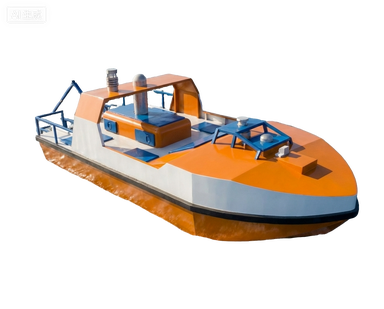
A large monohull platform in GRP or aluminium, approximately 7.5 m long and 2.5 m wide with a 300 kg payload capacity, suited to long-duration, wide-area surface work.
- Hull: 7.5 m × 2.5 m, weight approx. 2,000 kg
- Payload: up to 300 kg, draught 0.45 m fully loaded
- Twin 20 kW electric thrusters, 40 kW total
- Cruising 2 m/s, full speed 7 m/s
- Endurance: 8–12 hours at cruising speed, 6–8 hours fully loaded
Windrider Catamaran USV
Compact, agile working platform
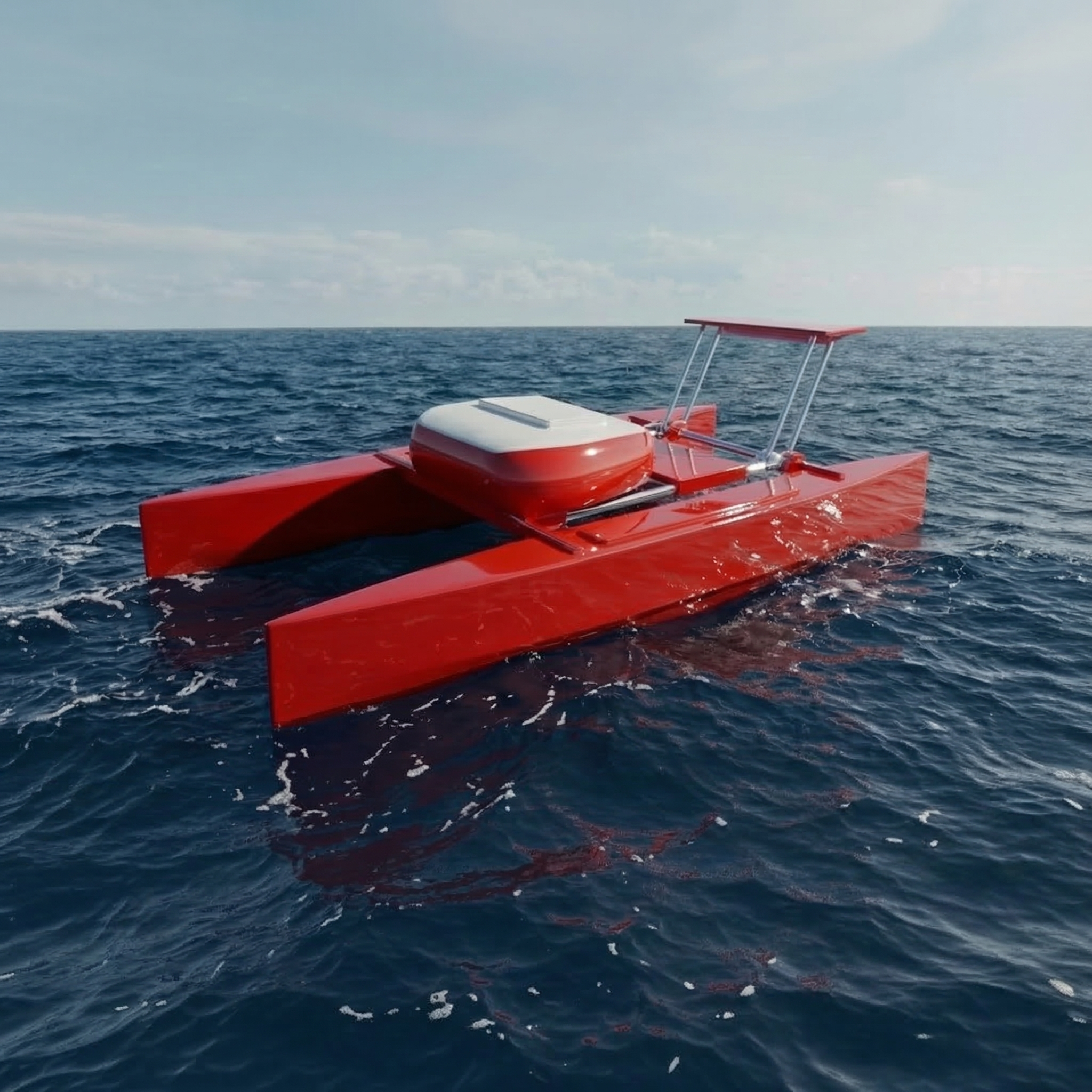
A compact catamaran in nano carbon fibre composite, approximately 2.5 m long and 1.6 m wide, weighing about 90 kg unloaded with a payload of ≥60 kg, suited to shallow and nearshore waters.
- Hull: 2.5 m × 1.6 m, unloaded weight approx. 90 kg
- Payload: ≥60 kg, draught ≤0.45 m fully loaded
- Twin ducted propeller drive, resistant to weed and fishing nets
- Cruising 2 m/s, full speed 5 m/s
- Endurance: 8 hours cruising, 2 hours at full speed
Specification Comparison
Monohull and catamaran technical comparison
| Technical Parameters | Monohull USV | Catamaran USV |
|---|---|---|
| Hull material | GRP or aluminium | Nano carbon fibre composite |
| Hull Size | 7.5m × 2.5m | 2.5m × 1.6m |
| Hull weight | Approx. 2,000 kg | Approx. 90 kg unloaded |
| Payload Capacity | Up to 300 kg | ≥60kg |
| Draught | 0.45 m fully loaded | ≤0.45 m fully loaded |
| Propulsion System | Twin 20 kW electric thrusters, 40 kW total | Twin ducted propeller drive |
| Battery | 100 kWh high-voltage lithium battery pack | 14.8 V lithium polymer battery (100 Ah) |
| Cruising speed | 2m/s | 2m/s |
| Full speed | 7m/s | 5m/s |
| Endurance (cruising) | 8–12 hours | 8 hours |
| Endurance (full speed) | 6–8 hours fully loaded | 2 hours |
| Sea state capability | - | ≥ Sea State 3 |
| Positioning System | Integrated GNSS positioning (centimetre-level) | BeiDou positioning (horizontal accuracy ≤2.5 m) |
| Communications | 4G/5G public network + satellite + private radio | 4G data link + radio (range ≥2 km) |
| Main control system | Manned and unmanned modes with autonomous navigation | Domestically developed control software with autonomous return and obstacle avoidance |
Applications
Windrider USVs in service across a wide range of waterway operations
Hydrographic Survey
Seabed topographic mapping, bathymetric sounding and channel survey with precise survey data.
Environmental Monitoring
Monitoring of water quality parameters, pollutant dispersion and algal distribution in support of environmental protection.
Waterway Patrol
Regular patrol of reservoirs, rivers and coastlines to identify hazards early.
Scientific Research
Support for marine research: hydrological survey, biological sampling and meteorological observation.