中文

AI Vessel Motion Analysis and Perception System

Intelligent monitoring of large vessels at berth

For terminals with limited manoeuvring water, the system monitors vessel motion across six degrees of freedom in real time using industrial machine vision, guarding against violent movement caused by adverse weather and sea state to keep cargo operations safe, stable and efficient.

View Specifications
6DOF Six-DOF Monitoring
1mm Accuracy at 10 m
24/7 All-Weather Monitoring
Real Time Threshold Alarms

System Overview

Intelligent monitoring designed for the port environment, safeguarding large vessels at berth

Intelligent · Real-Time · Reliable

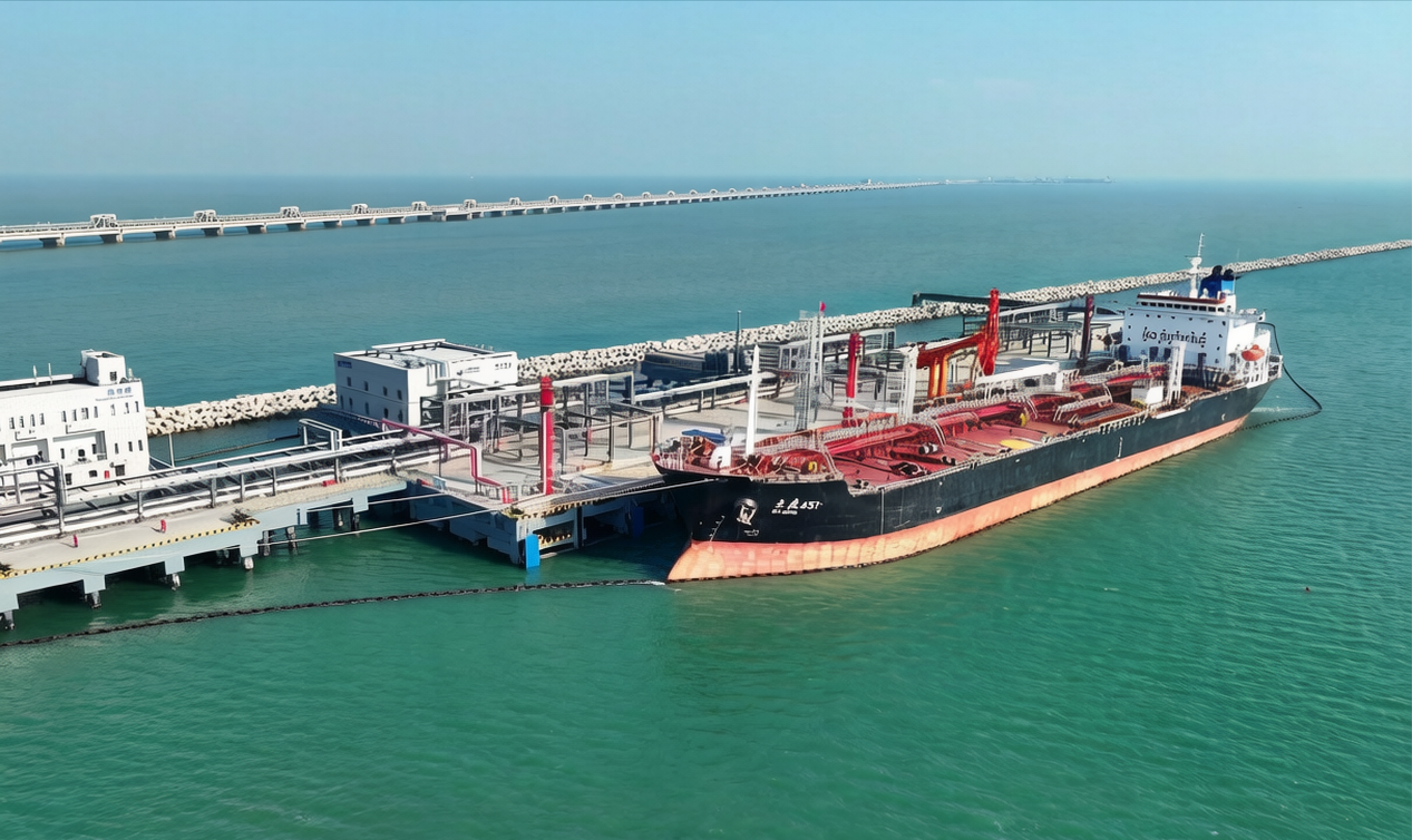
Where berths have limited manoeuvring water and are exposed to ocean swell and local cyclones, adverse weather and sea state can set up violent vessel motion that undermines the safety, stability and efficiency of operations and may lead to serious incidents.

The system provides intelligent real-time monitoring of vessel attitude in the moored condition. Industrial machine vision and advanced algorithms track all six degrees of freedom, and line-of-sight sensors improve measurement accuracy in fog and at night.

  • Real-time monitoring of all six degrees of freedom (surge, sway, heave, roll, pitch, yaw)
  • Threshold alarms for prompt action
  • Objective data for terminal dispatch, improving productivity and reducing incidents
  • Available on PC and mobile, viewable in real time by pilots, maritime authorities and the terminal
Application scenario

Core Functions

Monitoring and management functions

Real-Time Monitoring

Vessel speed, acceleration and vessel-to-quay distance are acquired in real time during berthing and unberthing, and six-DOF attitude is monitored continuously at berth.

Risk Alarms

Displacement and angle thresholds trigger live alarms when exceeded, providing the data basis for adjusting mooring lines and securing the vessel safely.

Data Management

Historical query, trend analysis, statistics and export, with data viewable at 1, 10 and 30 second and 1, 5 and 10 minute intervals.

Trend Analysis

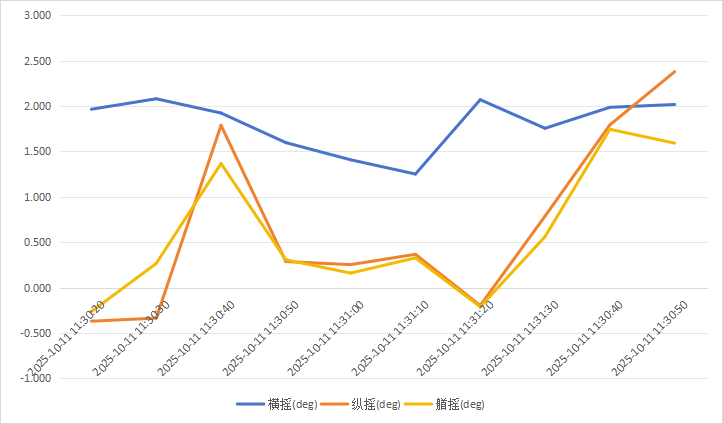
Line charts and pie charts present trends in the six-DOF data and their statistical distribution.

All-Weather Monitoring

Line-of-sight sensors maintain data accuracy at night and in fog for continuous 24-hour monitoring.

Multi-Platform Access

PC and mobile access allows pilots, maritime authorities and terminal staff to view vessel motion in real time.

System Interface

A clear, usable interface

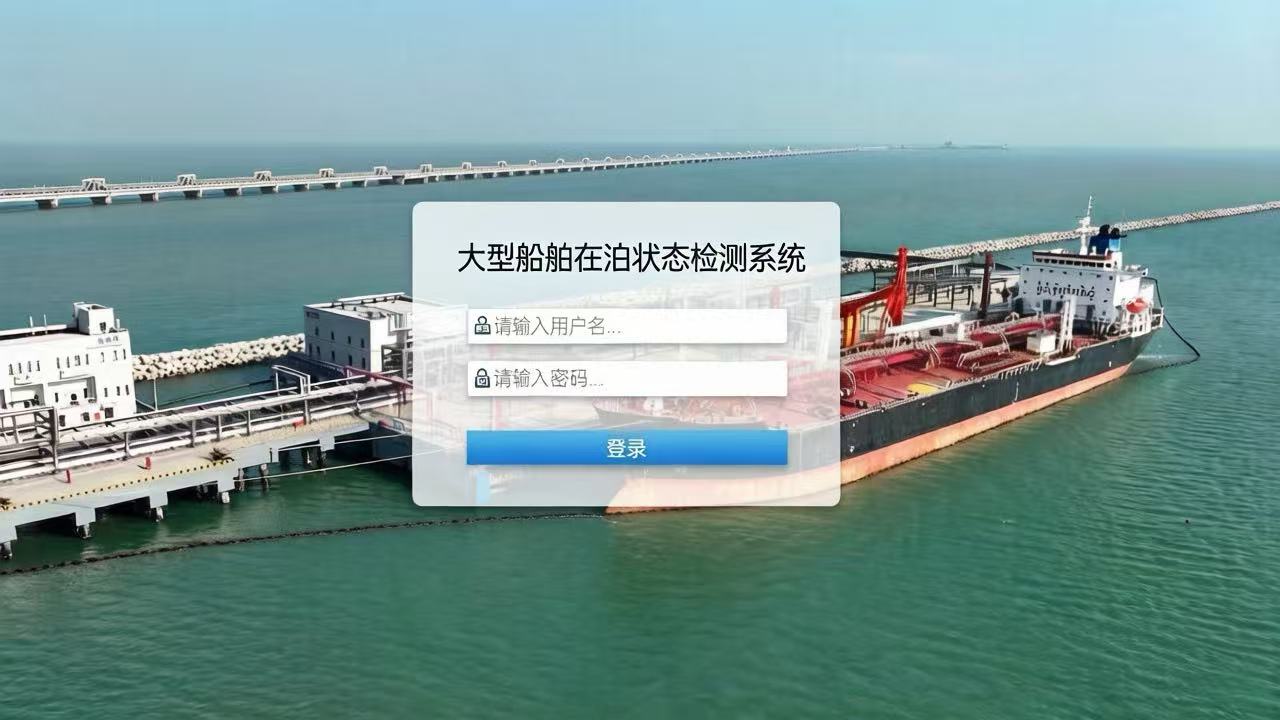
Login

Enter credentials on the login page and select Login to access the system.

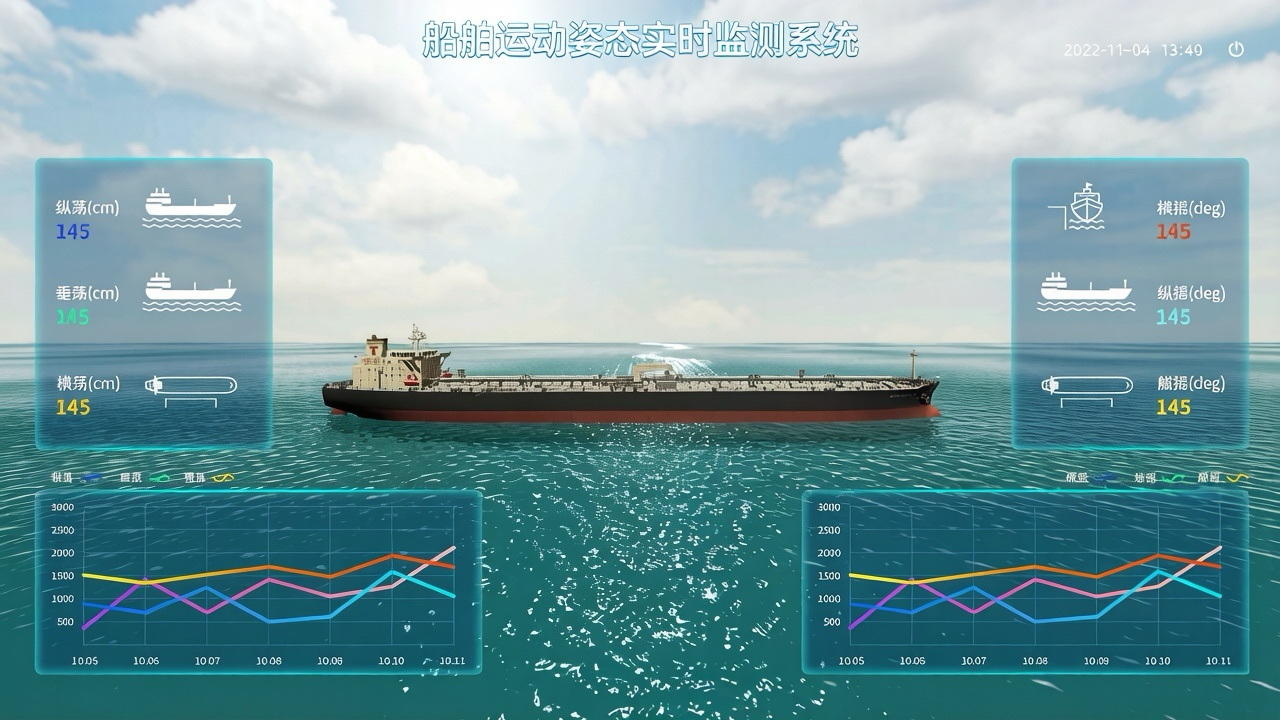
Main Screen

Main Screen

Displays per-unit-time changes in the six-DOF data, a one-minute trend chart, berthing status at the terminal, system alarms and query functions.

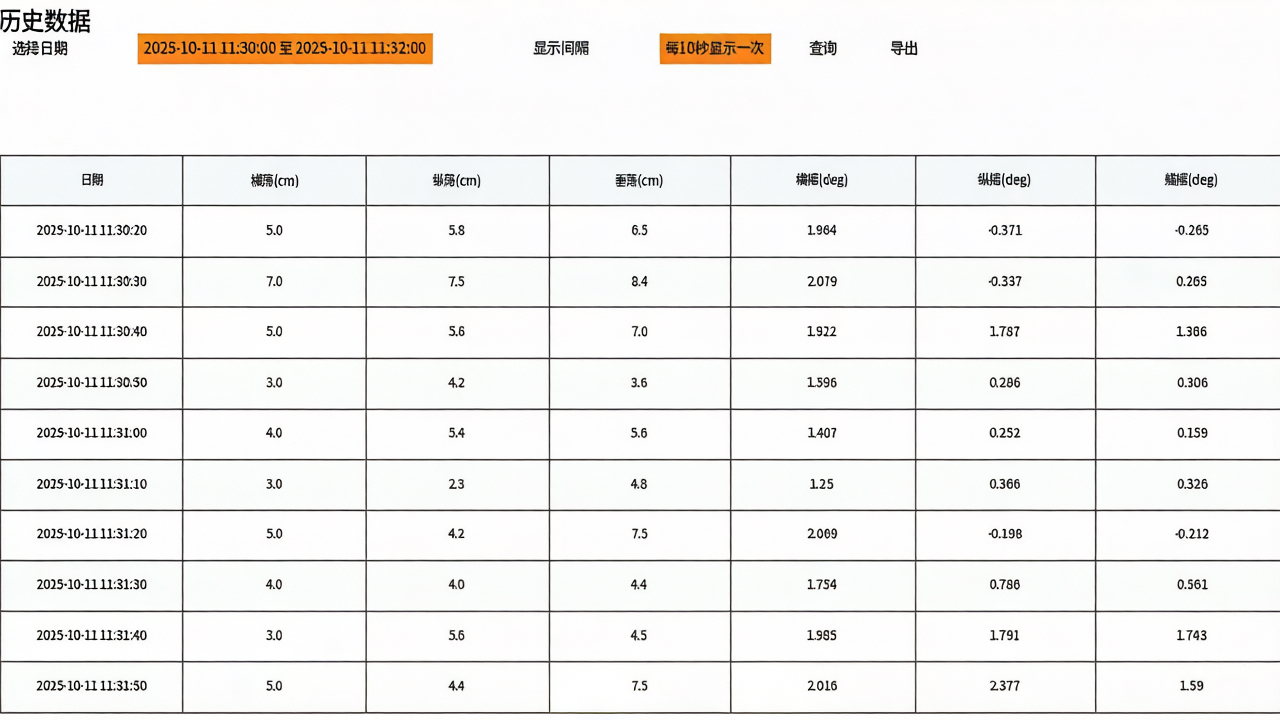
Historical data query interface

Historical data query

Query the past three months of six-DOF data at 1, 10 and 30 second and 1, 5 and 10 minute intervals, with export.

Trend analysis interface

Trend Analysis

Line charts show trends in the six-DOF data and pie charts show their distribution, giving a direct reading of vessel motion.

Software Copyrights

Intellectual Property

Software Copyrights

Intelligent six-DOF vessel motion analysis system fusing vision and lidar V1.0

Registration No. 2026R11L0795835

Software Copyrights

Intelligent radar-optical image fusion algorithm for night and fog navigation V1.0

Registration No. 2026R11L0793281

Working Principle

Industrial stereo vision ranging

Industrial machine vision measurement principle

Industrial Machine Vision

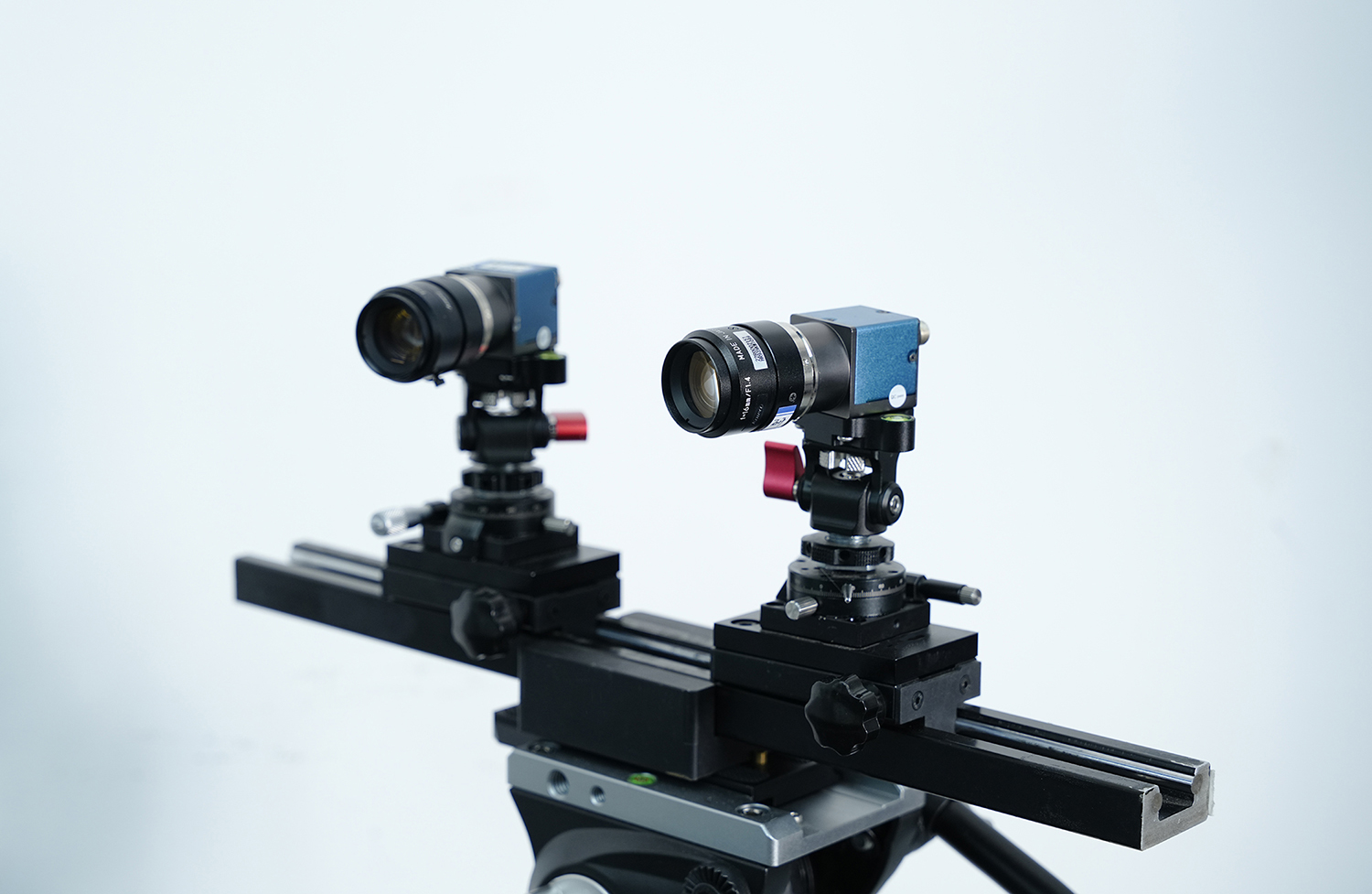
The system applies the principle of stereo ranging in industrial vision, mimicking human binocular perception to derive distance passively. An object is observed from two or more viewpoints and the pixel correspondence between the resulting images is used with triangulation to compute disparity and recover three-dimensional information.

Proprietary algorithms with line-of-sight sensors cover measurement distances from decimetres to hundreds of metres, with accuracy down to 1 mm at 10 m. The vessel is identified automatically, and feature points are extracted and analysis begins once the vessel is moored.

  • Real-time six-DOF monitoring using advanced algorithms
  • Single-point and multi-point 2D and 3D monitoring
  • GPU acceleration for high-speed dynamic real-time analysis
  • Non-contact monitoring that does not interfere with operations

Six Degrees of Freedom

The six basic motions of a vessel under mooring

Linear Motion (Translation)

Sway
Side-to-side translation
Surge
Fore-and-aft translation
Heave
Vertical translation

Rotational Motion

Roll
Side-to-side rotation about the X axis
Pitch
Fore-and-aft rotation about the Y axis
Yaw
Bow swinging left and right about the Z axis

Axis Definitions

X axis (longitudinal)
Bow-to-stern direction
Y axis (transverse)
Port-to-starboard direction
Z axis (vertical)
Upper deck to tank top direction

Technical Specifications

System parameters and performance figures

Monitoring Performance

Monitored axes Six degrees of freedom (sway, surge, heave, roll, pitch, yaw)
Measurement accuracy 1 mm at 10 m
Measurement distance Decimetres to hundreds of metres
Update rate Updated every second
Environmental Adaptability Operates normally in fog and at night

Hardware Requirements

Vision sensor Industrial stereo vision sensor
CPU Minimum dual core, recommended quad core or higher
Graphics Minimum integrated graphics, recommended GTX 1050 Ti or higher
Memory Minimum 4 GB, recommended 8 GB or more
Display resolution 1920 * 1080

Software environment

Operating system Windows, Linux, macOS
User permissions Three permission levels (view, query, download)
Data storage Three months of history
Alarms User-defined thresholds with live alarms when exceeded

Operation and Maintenance

Recommended practice for long-term reliability

Sensor Cleaning

Line-of-sight sensors are affected by seawater spray and mineral dust, which foul the lens and degrade accuracy. Clean the sensor lens once a week.

System Maintenance

The visualisation client uses Unity3D for the digital twin. Restart the server once a week to keep it responsive.

Periodic Inspection

Fishing vessels occasionally approach the berth fenders. Inspect the front-end equipment regularly for loosening and deformation and report promptly to keep it safe.

Applications

Suited to a wide range of berth and terminal scenarios

Oil Terminals

Particularly suited to oil terminal berths with limited manoeuvring water, safeguarding large tankers at berth.

Container Terminals

Container terminal quays, monitoring vessel attitude during berthing, unberthing and at berth.

Bulk Terminals

Bulk terminals, guarding against violent vessel motion in adverse weather and sea state.

Multi-User Coordination

Pilots, maritime authorities and terminals view vessel motion in real time on PC and mobile, enabling coordinated working.